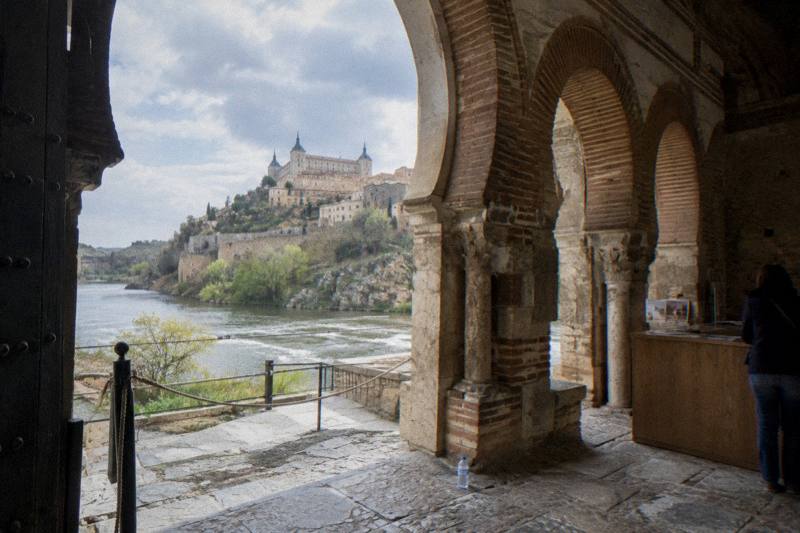
Free Walking Tour In Toledo In Winter: Temperatures, Frost And Fog From November To February
What a free walking tour in Toledo is like from November to February: frost, fog, rain, shorter days, which free walks suit a cold day and which indoor backups are free.
In Short
Toledo stays walkable all winter. The 3 free walking tours in English, all on GuruWalk, keep the same meeting points at Plaza de Zocodover and Calle de Armas 3, and each lasts between 1 hour 30 minutes and 1 hour 45 minutes. Frost and fog are part of the season rather than obstacles, and the pay-what-you-want model means a cold day costs nothing beyond what you decide to give. Indoor free backups exist too, from the currently free Santa Cruz museum to the free Wednesday at the Alcázar.
This question sits inside the how tip-based free tours work guide.
Quick Facts
| Fact | Detail |
|---|---|
| Free walks in English | 3 free walking tours in English, all on GuruWalk |
| Price model | Free to join, pay what you want |
| Durations | 1 hour 30 minutes to 1 hour 45 minutes |
| Meeting points | Plaza de Zocodover, and Calle de Armas 3 beside it |
| Languages | Two walks in English, one in English and Spanish |
| Free indoor backup | Santa Cruz museum, currently free with no end date published |
| Free day at the Alcázar | Every Wednesday, for everyone |
What Is Toledo Like In Winter For A Free Walk?
Toledo in winter is a compact, walkable old town where the season changes the atmosphere rather than the free tour circuit itself. The three English walks all meet in or beside Plaza de Zocodover, the city's main square, so a winter morning starts where a July one does. The pay-what-you-want model does not change with the weather: every walk stays free to join, reserved on GuruWalk, tip entirely up to you.
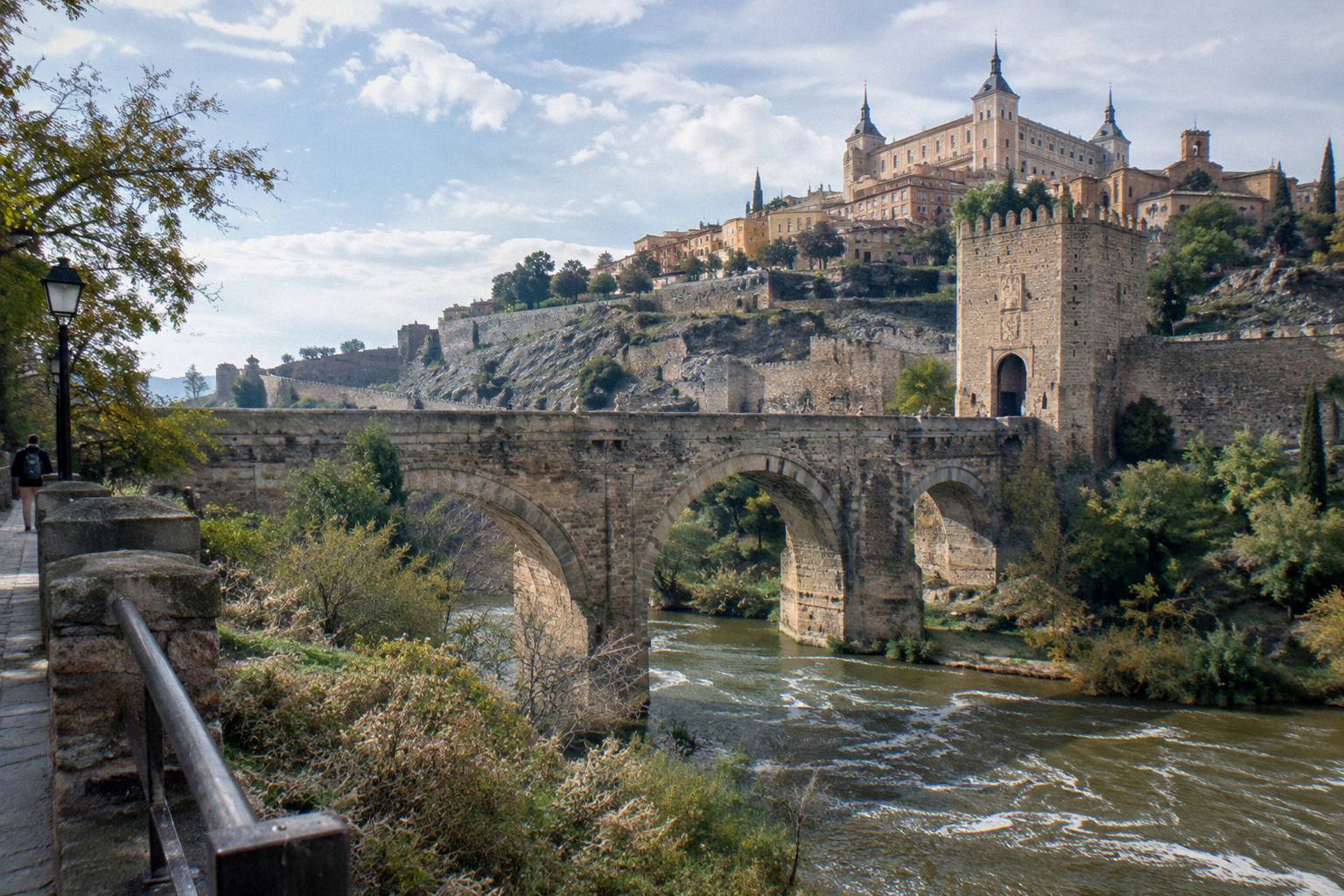
The practical shape of a Toledo visit barely moves between November and February. The old town sits on a hill above the Tagus, its streets narrow and steep, and the free sights that anchor any walk, the Puerta de Bisagra, the Puerta del Sol, the Puente de Alcántara, the Puente de San Martín, the Mirador del Valle, remain free and open through the winter months. The riverside Senda ecológica del Tajo, the ecological path along the river, is also free, and in winter it is where the fog sits thickest in the mornings, hanging over the water below the bridges.
What changes is the light and the pace. Winter days are short, and the best viewpoints, especially the Mirador del Valle across the river, reward a midday or early-afternoon visit far more than a late one, because darkness arrives early and the pale winter light is already low by mid-afternoon. A sensible winter plan puts the outdoor walking early, the viewpoints around the middle of the day, and one of the free or conditionally free museums in the late afternoon slot when the cold starts to bite.
The walks themselves are short enough to fit this rhythm. Every English walk on the roster lasts between 1 hour 30 minutes and 1 hour 45 minutes, which is long enough to cover serious ground and short enough that nobody freezes standing still. Because each is a GuruWalk page run by an independent local guide, the reservation, the meeting and the payment all happen through GuruWalk, and the free tour itself happens on foot, outdoors, in whatever the sky is doing that day. The Free Things To Do In Toledo site covers the rest of the free circuit if you want to build a full cold-day plan, including the free one-day itinerary that chains viewpoints, gates and walks together.
One more winter advantage deserves a plain statement: the pay-what-you-want model removes all risk from a cold morning. If the fog is so thick that the views are gone, or the frost makes the cobbles unpleasant, you have paid nothing upfront. The walk is free to join and you decide at the end what it was worth, which in winter is exactly the kind of flexibility that makes trying a walk easy.
How Cold Does Toledo Get From November To February?
Toledo winters are properly cold rather than extreme, with frost a normal feature of November through February mornings and the sharpest cold early and late in the day. No walk on the roster is indoors, so you will be outside up to 1 hour 45 minutes in whatever the day brings. Warm layers and gloves that let you use a phone are the practical kit.
The city sits on a hill above a river valley at the edge of the Castilian meseta, and that geography is what makes its winter cold distinctive: the hill funnels wind along the river and the valley holds fog and frost longer than the plain. Mornings start frozen or near-frozen, midday lifts into something milder whenever the sun breaks through, and the temperature falls again fast once the light goes. For a free tour, that daily curve matters more than any single number: a walk that meets at midday feels like a different season from one that meets at nine in the morning.
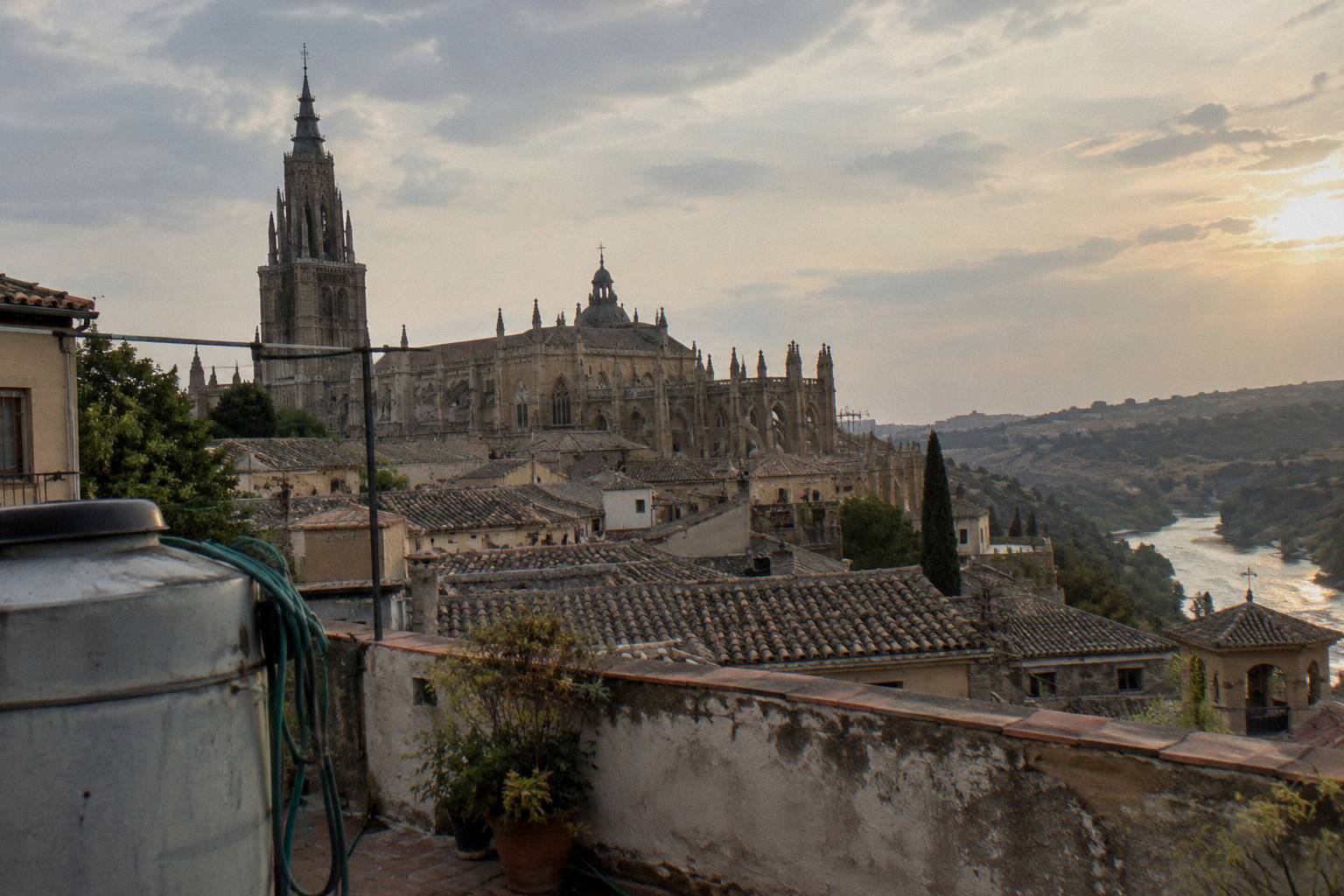
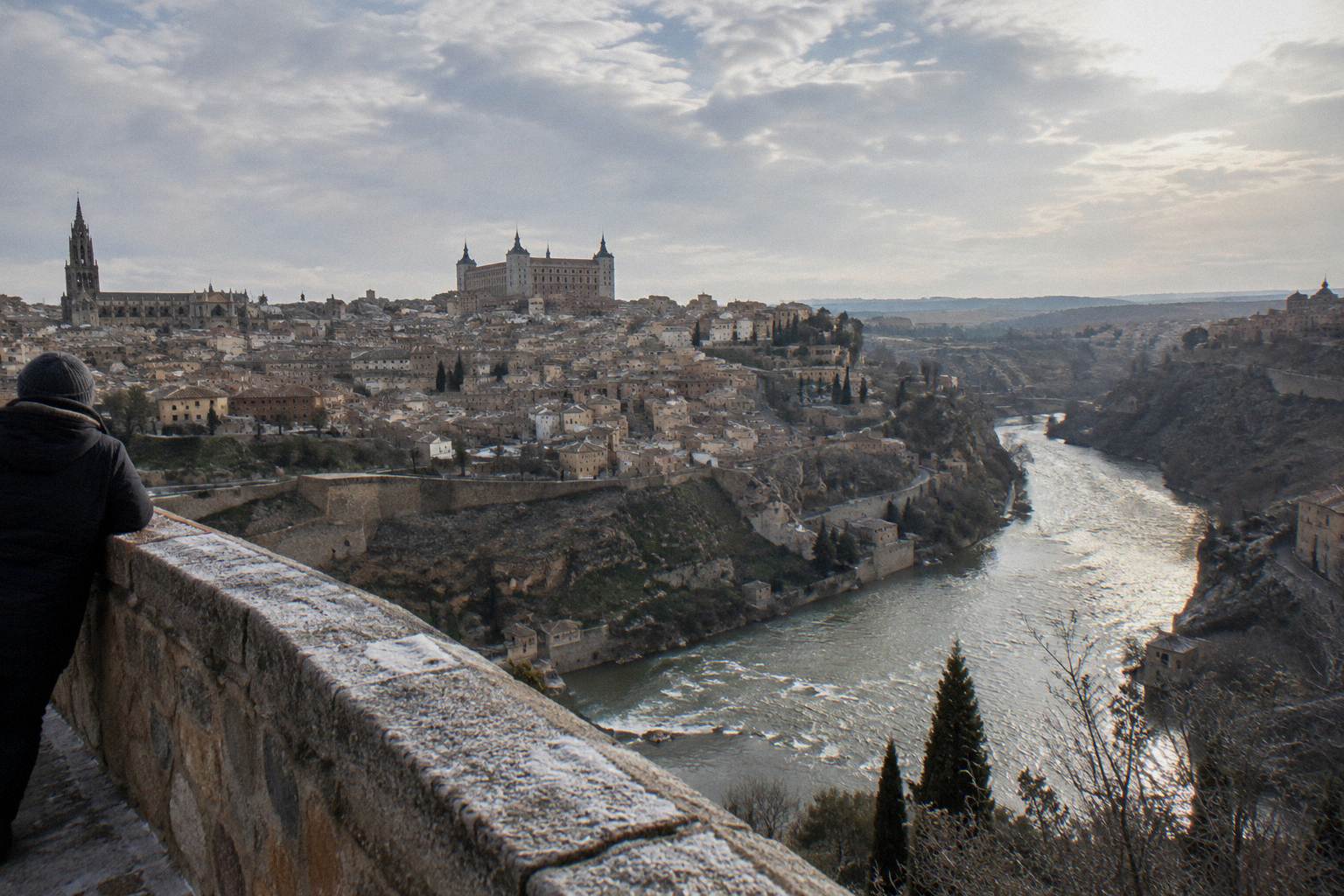
The cold also changes how the old town looks. Frost picks out the stone of the city walls, the Torre del Cubo and the Puerta de Alfonso VI stand crisp against clear winter skies after a frozen night, and the river mist softens the silhouette of the Alcázar and the Cathedral from the far bank. Photographers get a trade-off that summer never offers: sharper, lower light on the stone, at the price of numb fingers and a shorter window to use it. The Escaleras mecánicas de Recaredo, the public escalators that carry walkers up from the station side toward the old town, are a quiet blessing on a cold climb.
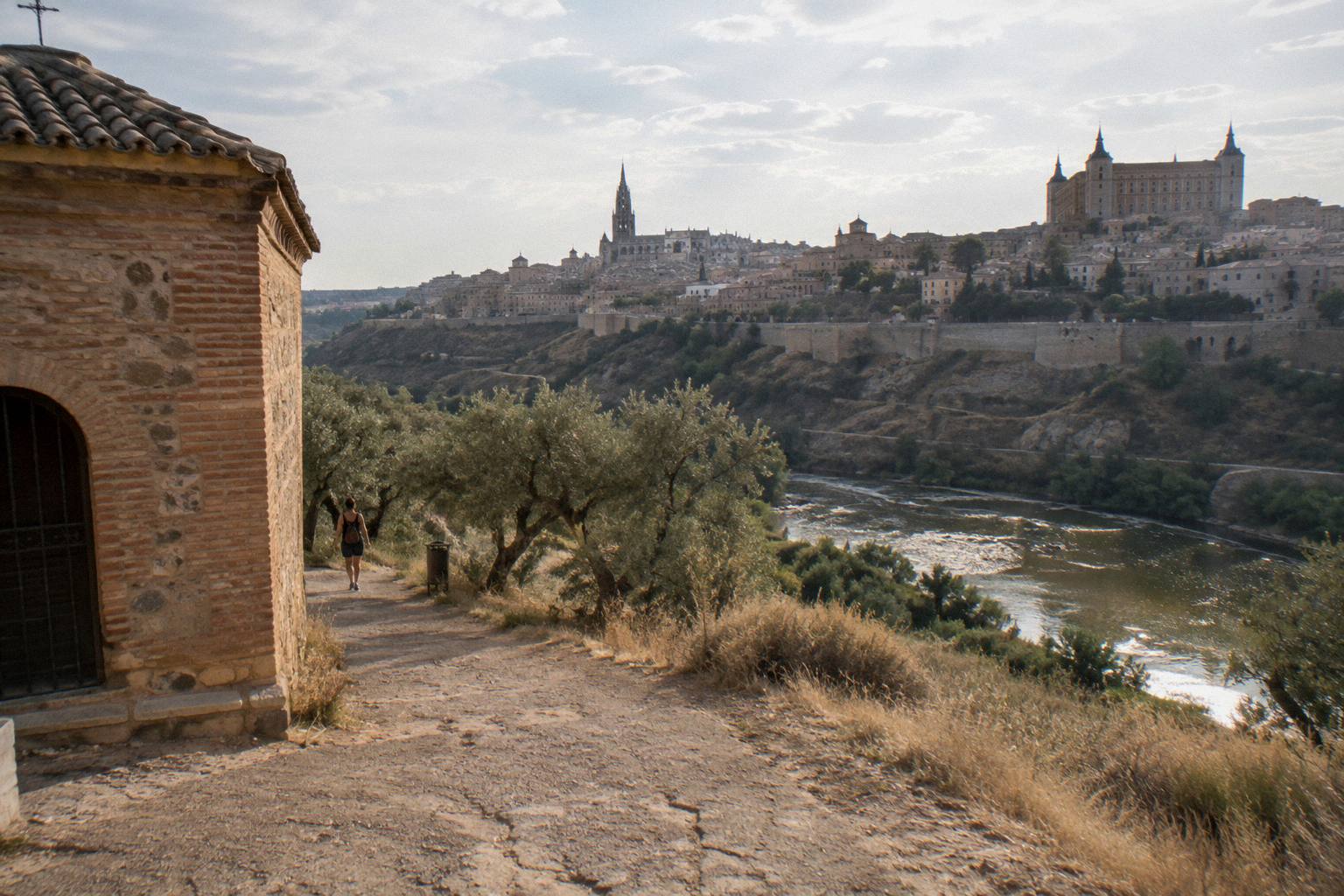
Planning around the cold is simple. Book the walk for the middle stretch of the day rather than the first hour of daylight, when frost is still on the ground. Keep the 1 hour 30 minute walks in mind as the baseline: the Mystery And Subterranean Spaces walk by Enjoytoledo runs 1 hour 30 minutes, and the bilingual best of Toledo in 90 minutes walk by FollowMe Toledo runs the same, while the English Three Cultures Walk by Toledo a pie runs 1 hour 45 minutes. On a bitter day, the shorter two are the safer commitment.
The cold does one more thing worth knowing: it makes the free indoor stops genuinely valuable rather than optional extras. The Toledo tourist office on Plaza del Ayuntamiento is a warm place to regroup, and the museums with free windows, covered in detail below, turn the coldest two hours of an afternoon into heated time among paintings and archaeology. Winter planning in Toledo is really the art of alternating: outside for light and views, inside for warmth, back outside for the walk.
Between the outdoor blocks, the English Three Cultures Walk is the longest of the English options at 1 hour 45 minutes, which on a winter day is worth knowing before you reserve. It meets at Plaza de Zocodover, is run by Toledo a pie, and is rated 4.88 out of 5 across 251 GuruWalk reviews. It is free to join, pay what you want, and reserved through its GuruWalk page.
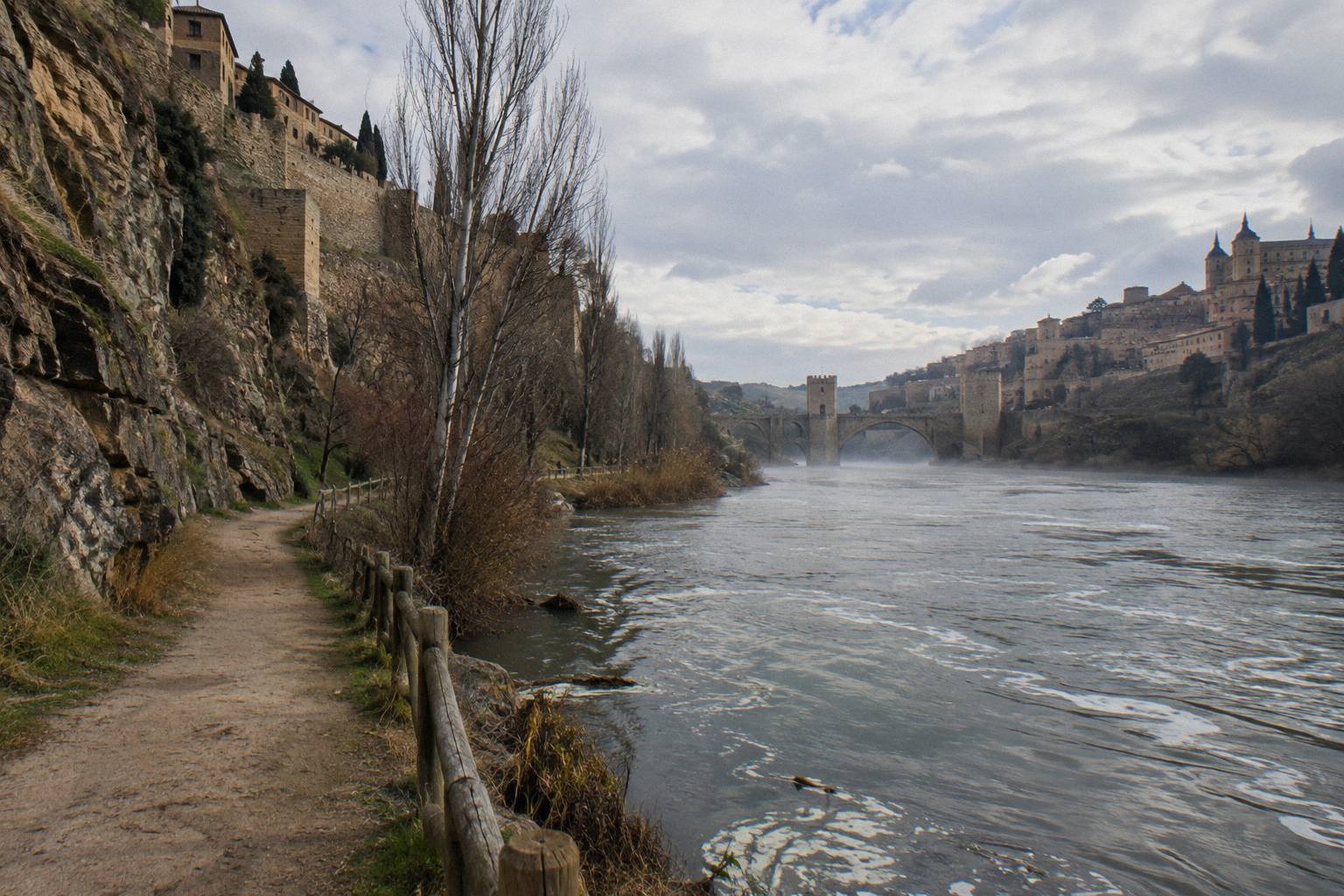
How Often Do Fog And Frost Occur?
Fog and frost are regular winter features of Toledo, tied to the river valley that wraps the hill on three sides. Frost forms on high stone and exposed viewpoints on clear nights, while fog pools over the Tagus below the bridges, sometimes hiding the river while the old town above sits in sunshine. It changes what you see, and it can swallow the best viewpoint entirely.
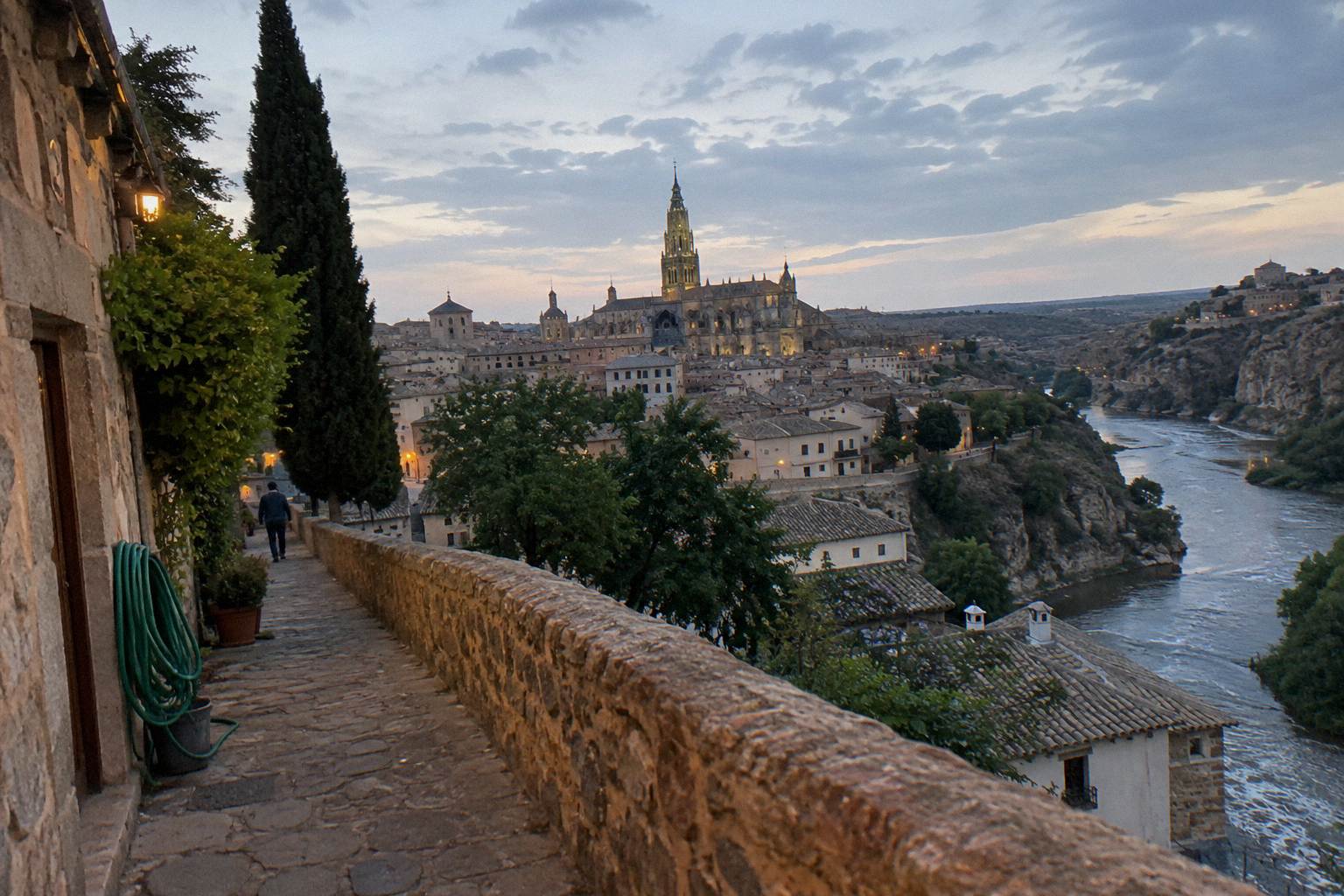
The fog mechanics are worth understanding because they shape the whole day. Cold air sinks into the valley overnight, moisture condenses over the river, and the result is a low fog that can sit below the city walls through the morning. From up on the hill, that is often a spectacular sight: the bridges and the riverbanks disappear into white while the Cathedral and the Alcázar rise above it. From down at the Puente de Alcántara or on the Senda ecológica del Tajo at river level, the same fog is a grey wall. The Mirador del Valle, the classic viewpoint from the far bank, can be either above the fog looking into a white valley or inside it seeing nothing.
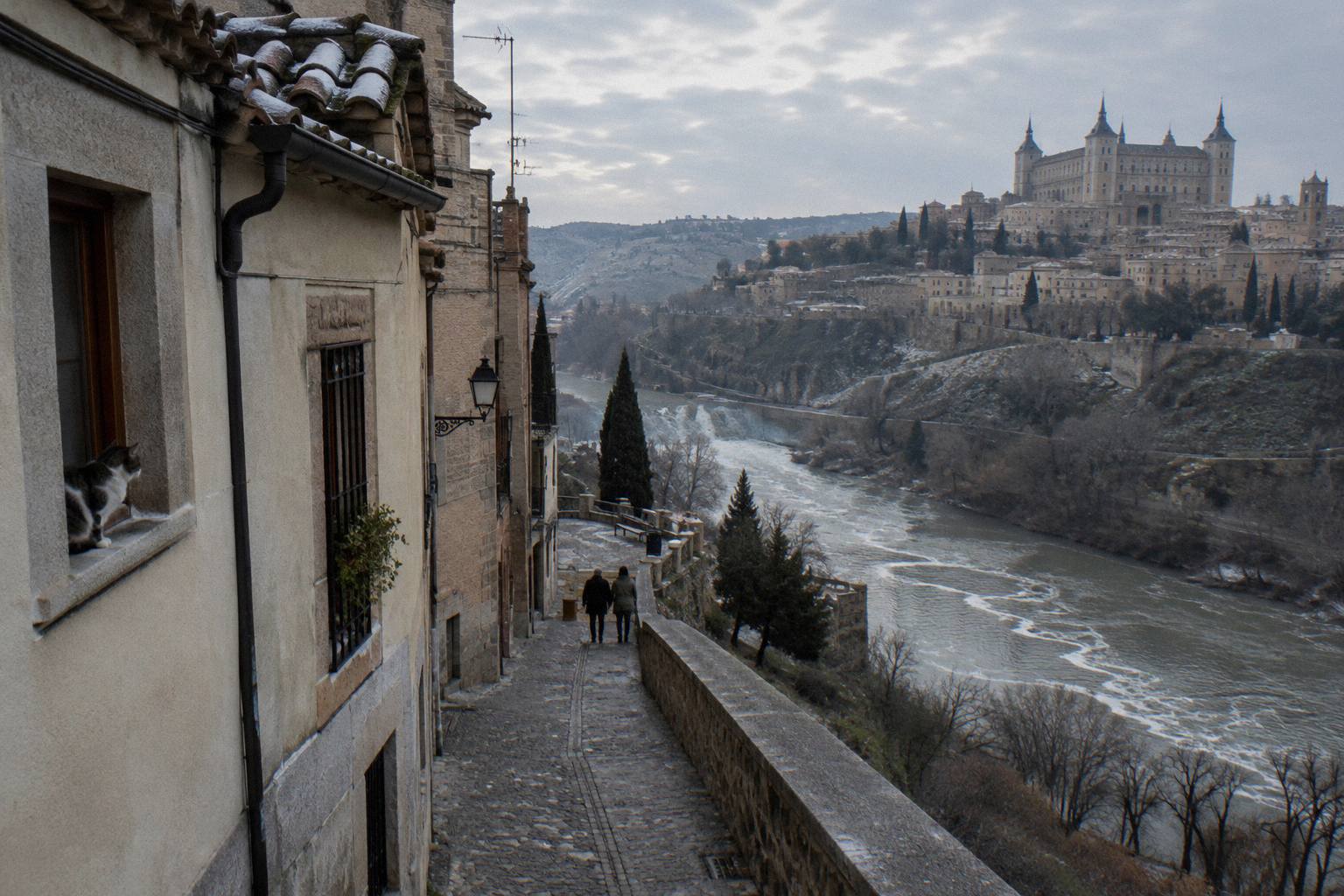
Frost follows the clear nights. After one, the stone of the Puerta de Bisagra, the Puerta del Sol and the walls along the Torre del Cubo holds a white edge well into the morning, and shaded streets in the old town stay icy underfoot after the open squares have thawed. The practical rule for walkers is straightforward: open, sunlit stone thaws first, shaded slopes and riverside paths stay slippery longest, so treat the descents to the bridges and any riverside stretch as the careful parts of a frosty morning.
The two conditions combine into the single most useful piece of winter advice for this city: put the viewpoints in the middle of the day. Morning fog tends to thin or lift as the day warms, and midday is when the Mirador del Valle is most likely to give you the full panorama of the hill, the bridges and the Cathedral. Late afternoon is the reverse, since temperature falls fast and valley fog can re-form toward dusk. A free walk at midday plus a viewpoint stop either side of it uses the weather instead of fighting it.
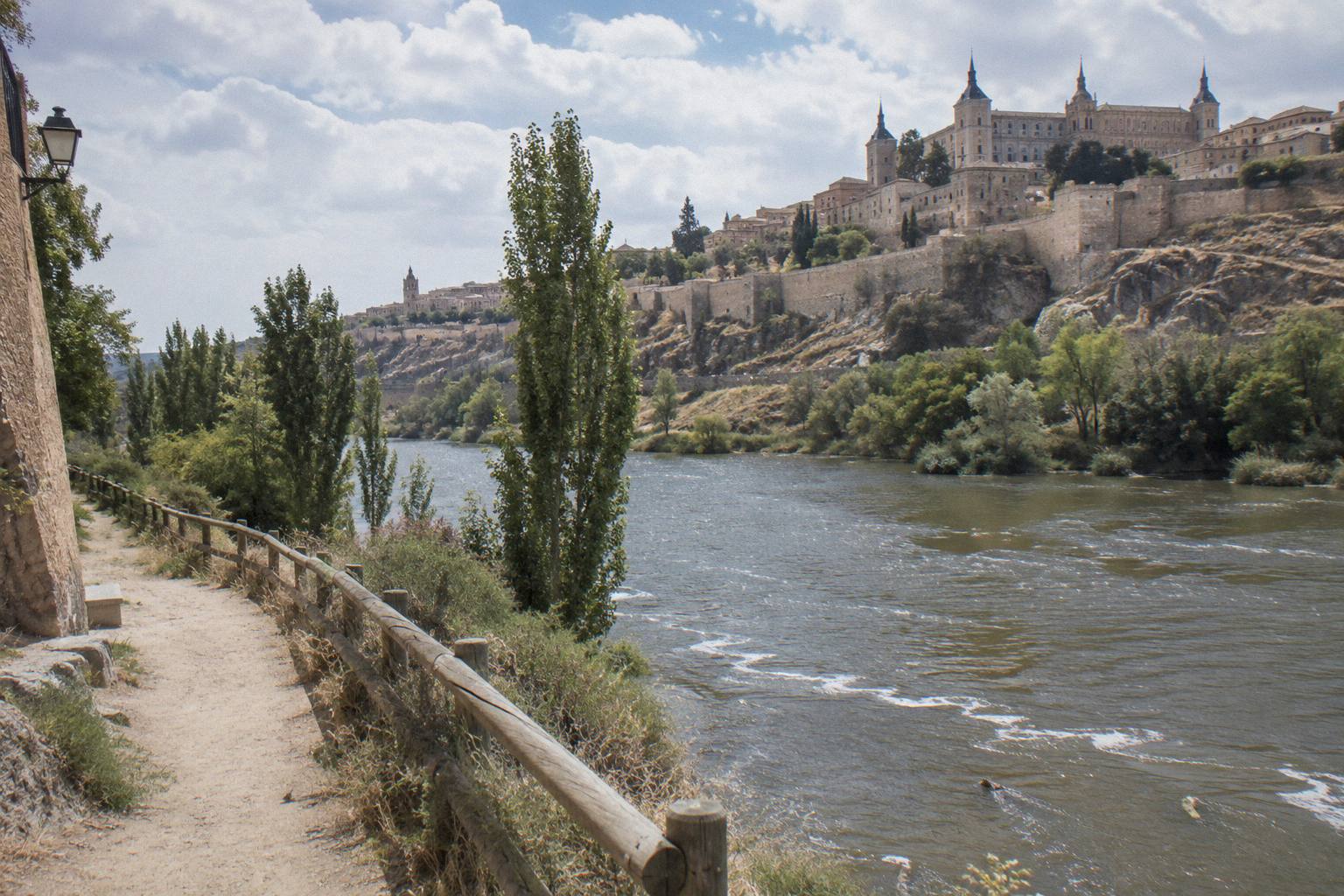
For photographers, frost and fog are not problems but the point. A frosty morning gives hard outlines and long shadows across the Tagus from the Paseo del Tránsito viewpoint; a foggy one gives layers, with towers and bell gables emerging from white in stages as the mist moves. Both look better from above, which is another quiet argument for keeping the river-level walk, the Senda ecológica del Tajo and the two bridges, for the clearest stretch of the day and doing the climbing when the fog is still burning off below you.
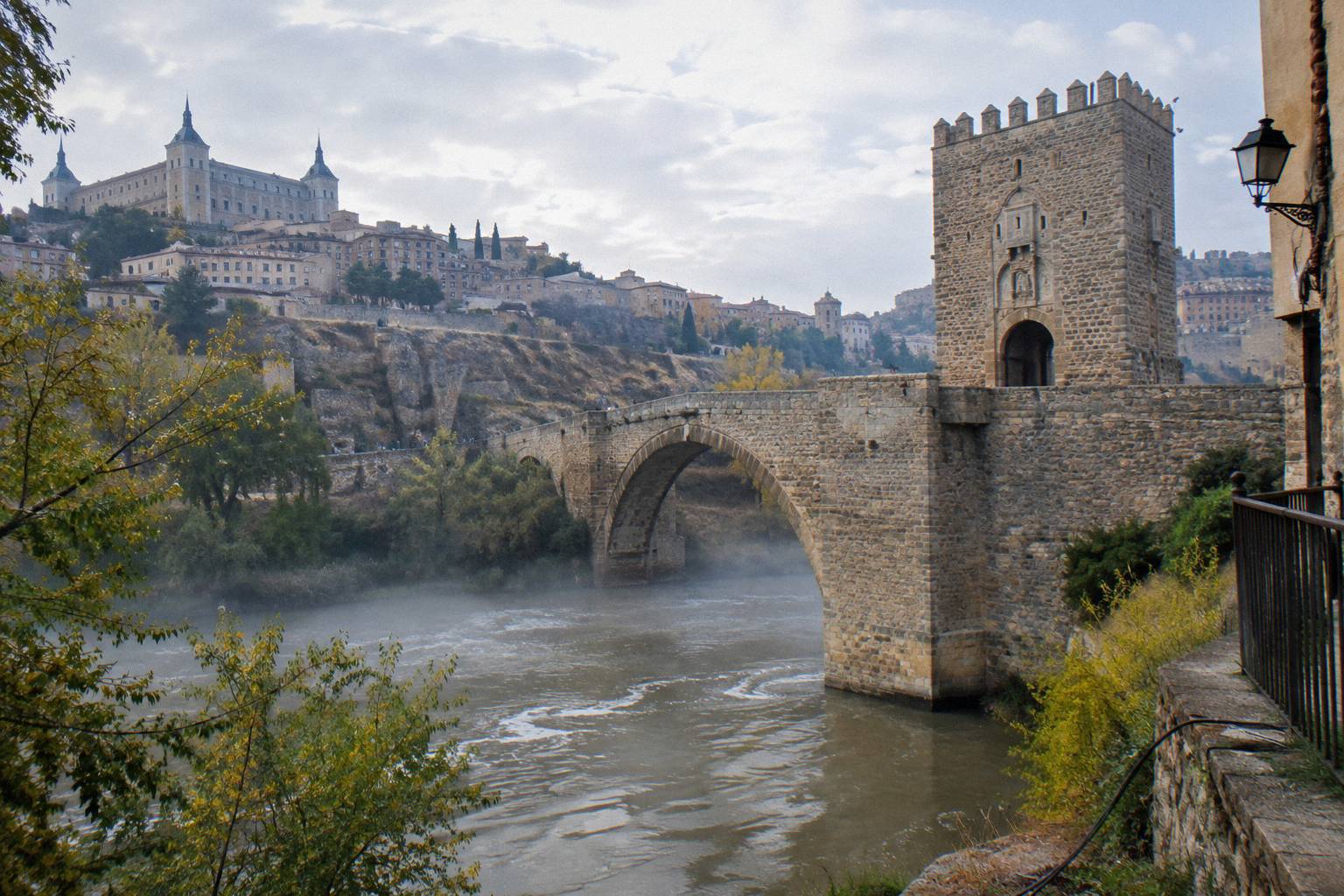
What Rain Should You Expect?
Rain in a Toledo winter comes in showers and wet spells rather than all-day monsoon, and the walks run whatever the sky is doing, since they are outdoor free tours with no indoor alternative. A waterproof layer beats an umbrella on the narrow streets, where wind funnels between buildings. Keep a dry slot in your day for the free museums as a fallback.
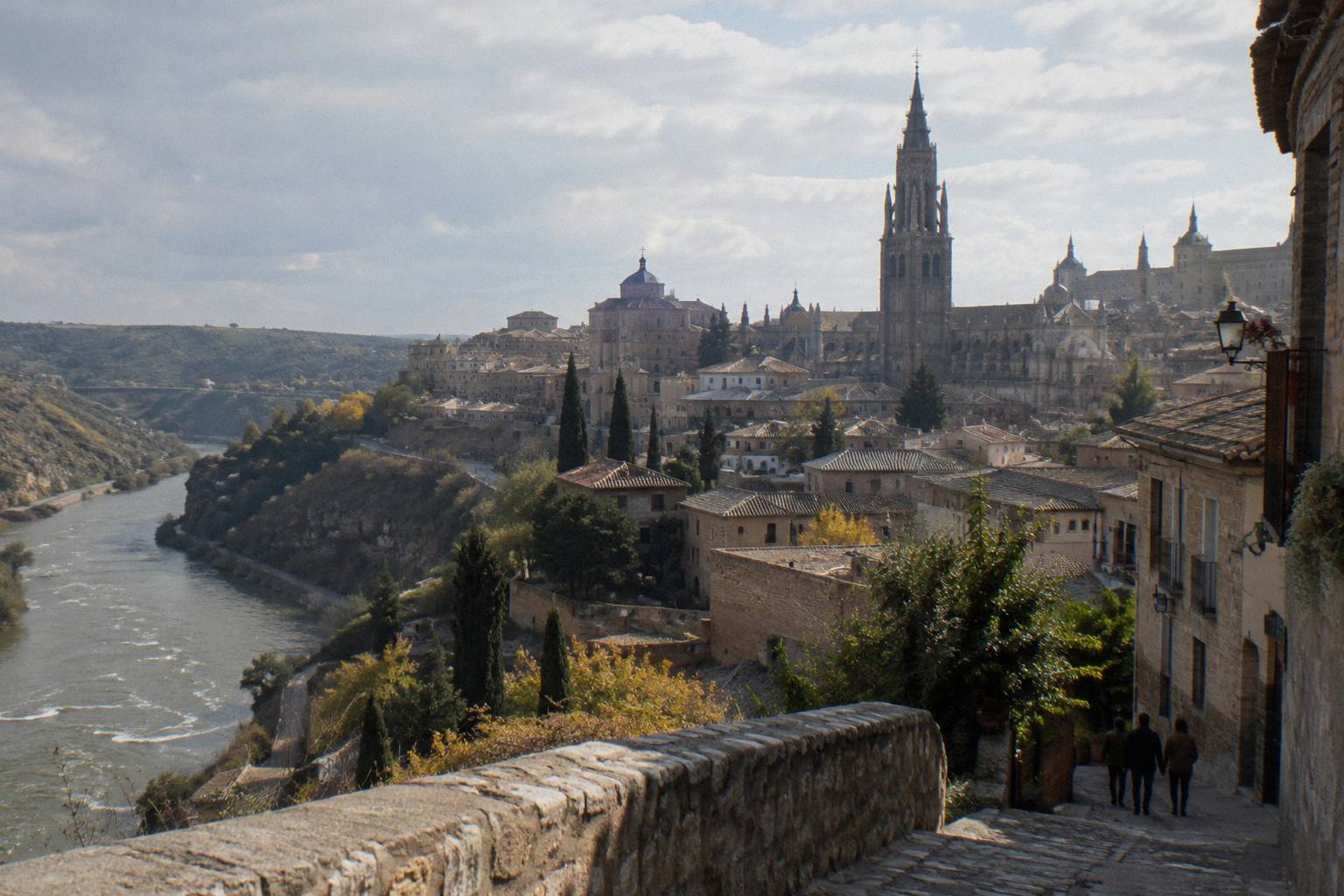
Wet cobbles are the real rain hazard in this city, not the rain itself. The old town slopes hard, stone becomes glassy when wet, and the descents toward the Puente de San Martín or down to the river are the stretches to take slowly. Shoes with grip matter more in a Toledo winter than in almost any Spanish city precisely because so much of the free circuit, the walls, the gates, the viewpoints, is bare stone worn smooth by centuries of feet. This is a fact of the terrain, not a prediction of the weather.
When rain forces you indoors, the free options are genuinely strong, provided you read the conditions correctly, because each museum answers to a different body with different rules. The Museo de Santa Cruz and the Museo de los Concilios, both run by the regional government, are currently free with no end date published. The Alcázar and its Army Museum are free every Wednesday for everyone, a national-body rule. The Museo del Greco and the Sefardi Museum, both run by the Ministry of Culture, are free from 14:00 on Saturdays and all day Sunday. Mix those windows wrong and you pay; match them and a rainy afternoon costs nothing.
| Indoor stop | Who runs it | Free window |
|---|---|---|
| Alcázar and Army Museum | Ministry of Defence | Every Wednesday, all day, everyone |
| Museo del Greco | Ministry of Culture | Saturday from 14:00, and all Sunday |
| Sefardi Museum | Ministry of Culture | Saturday from 14:00, and all Sunday |
| Museo de Santa Cruz | Regional government | Currently free, no end date published |
| Museo de los Concilios | Regional government | Currently free, no end date published |
| Cuevas de Hercules | City monuments body | Free, Tuesday to Saturday, 12:00-14:00 and 16:00-18:00 |
| Termas romanas | City monuments body | Free, Tuesday to Saturday only |
Note the two archaeology sites in that table, the Cuevas de Hercules and the Termas romanas: both are free but only Tuesday to Saturday, closed on Sunday and Monday, so they cannot rescue a wet weekend afternoon. The Cathedral, for its part, is never a free fallback for visitors: the cultural visit costs 12 EUR, and the only free admission categories are people born or resident in Toledo, archdiocese residents on Sundays, children under 8 with a family member, and people with disabilities over 64 percent with accreditation. The Cathedral's own site carries the current visit times.
Rain also interacts with the walks in one specific way worth saying plainly: a free tour in rain is still a free tour. Because every walk here is pay what you want and reserved on GuruWalk, a wet hour costs you nothing but the hour, and the guide keeps talking under whatever cover the route's squares offer. Some of the season's most atmospheric old-town sights, the Jewish Quarter streets free to walk at any hour, the Ermita del Cristo de la Vega across the river, take on a different character in drizzle, with wet stone deepening every colour.
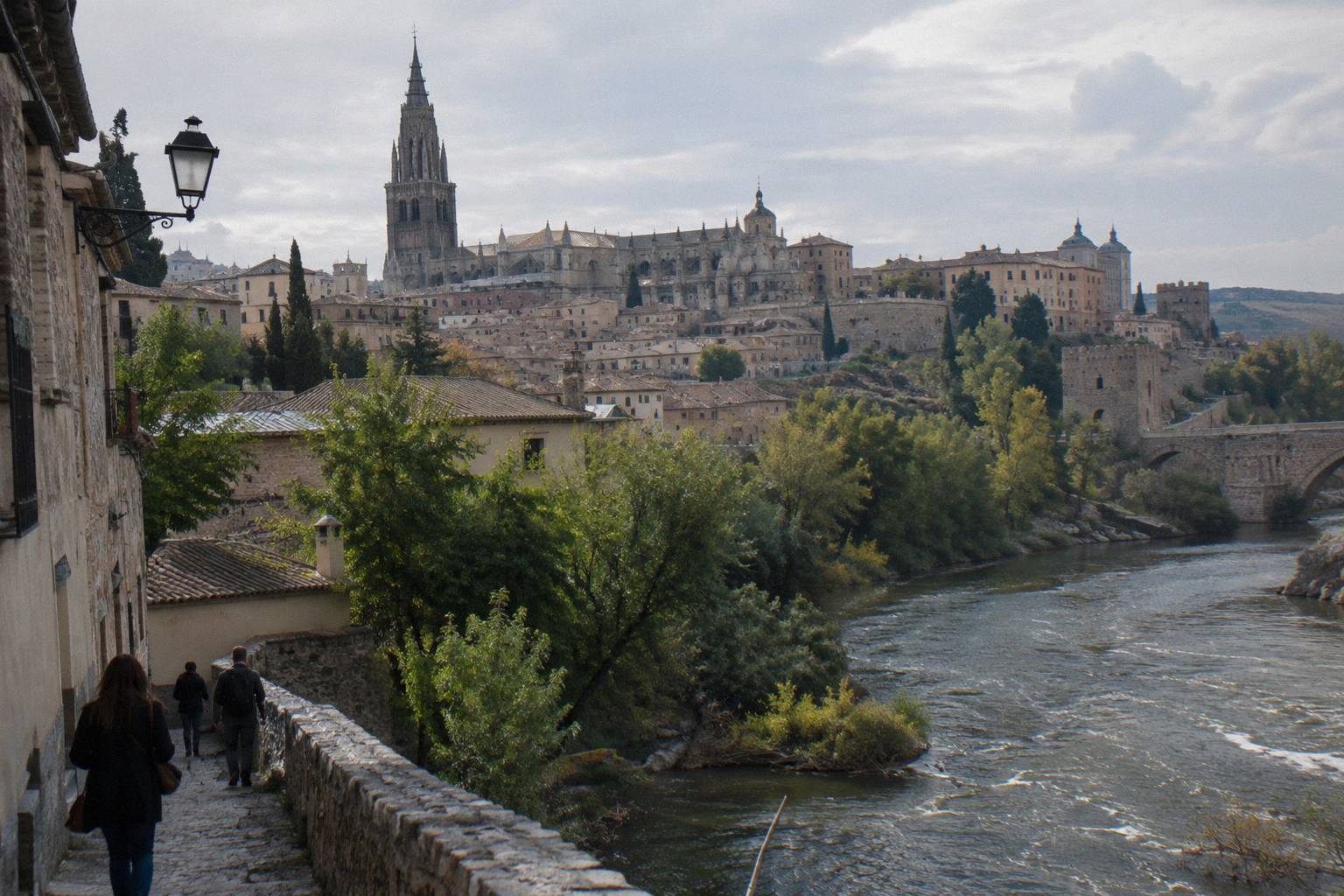
The last rain habit worth building is checking before you cross the river. The Mirador del Valle and the Circo Romano, the Roman circus remains, are both free and both exposed, with no shelter anywhere near them. They are the two stops most worth cutting when the sky turns, and the two most worth keeping when it holds, so look at the sky, look at the clock, and decide in that order.
Which Free Walks Suit A Winter Day?
All three English walks suit winter, because each is short, meets at the same central point, and leaves you beside warm indoor options. The choice is about duration and language rather than weather: two run 1 hour 30 minutes, one runs 1 hour 45 minutes, one is bilingual, and all are free to join, pay what you want, reserved on GuruWalk. On the coldest days the shorter two are easiest.
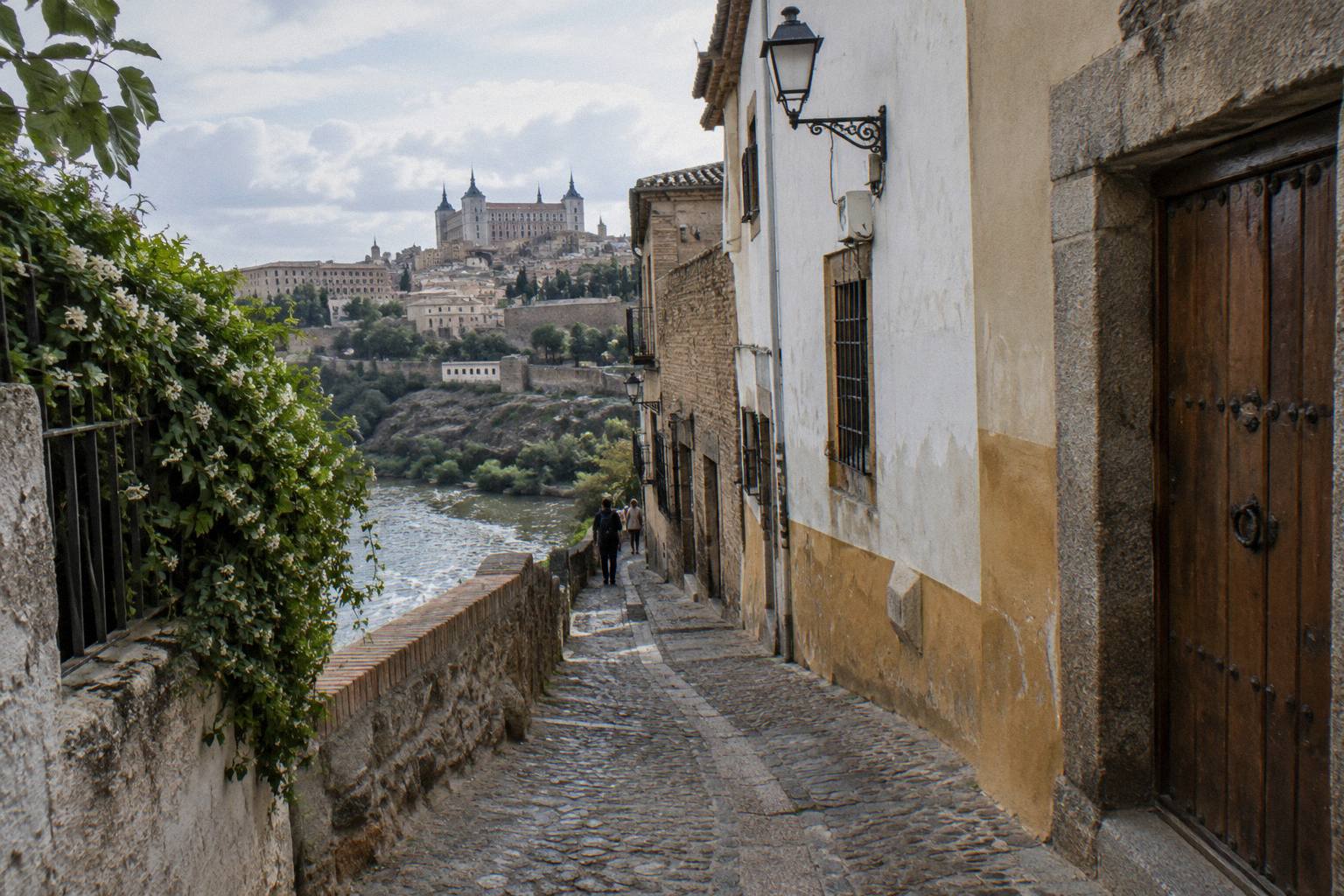
The English Three Cultures Walk, run by Toledo a pie, meets at Plaza de Zocodover, runs 1 hour 45 minutes in English, and carries a 4.88 out of 5 rating across 251 GuruWalk reviews. Its theme, the coexistence of the city's Jewish, Muslim and Christian histories, pairs naturally with a winter day because the Jewish Quarter streets it belongs to are free to walk at any hour and can be continued on your own afterward, whatever the walk itself covers. The Three Cultures framing is the city's most rewarding winter story: a lot of it can be read from doorways, arches and street names that cost nothing to stand in front of.
The Mystery And Subterranean Spaces walk, run by Enjoytoledo, also meets at Plaza de Zocodover and runs 1 hour 30 minutes in English, rated 4.86 out of 5 across 1,734 GuruWalk reviews, the largest review pool of the three by a wide margin. Its legends-and-night theme is a natural winter fit for a different reason: darkness comes early, and an atmosphere of mystery plays better against early dusk and empty squares than against July glare. Check the walk's GuruWalk page for the times it actually runs, since nothing about its schedule is fixed here.
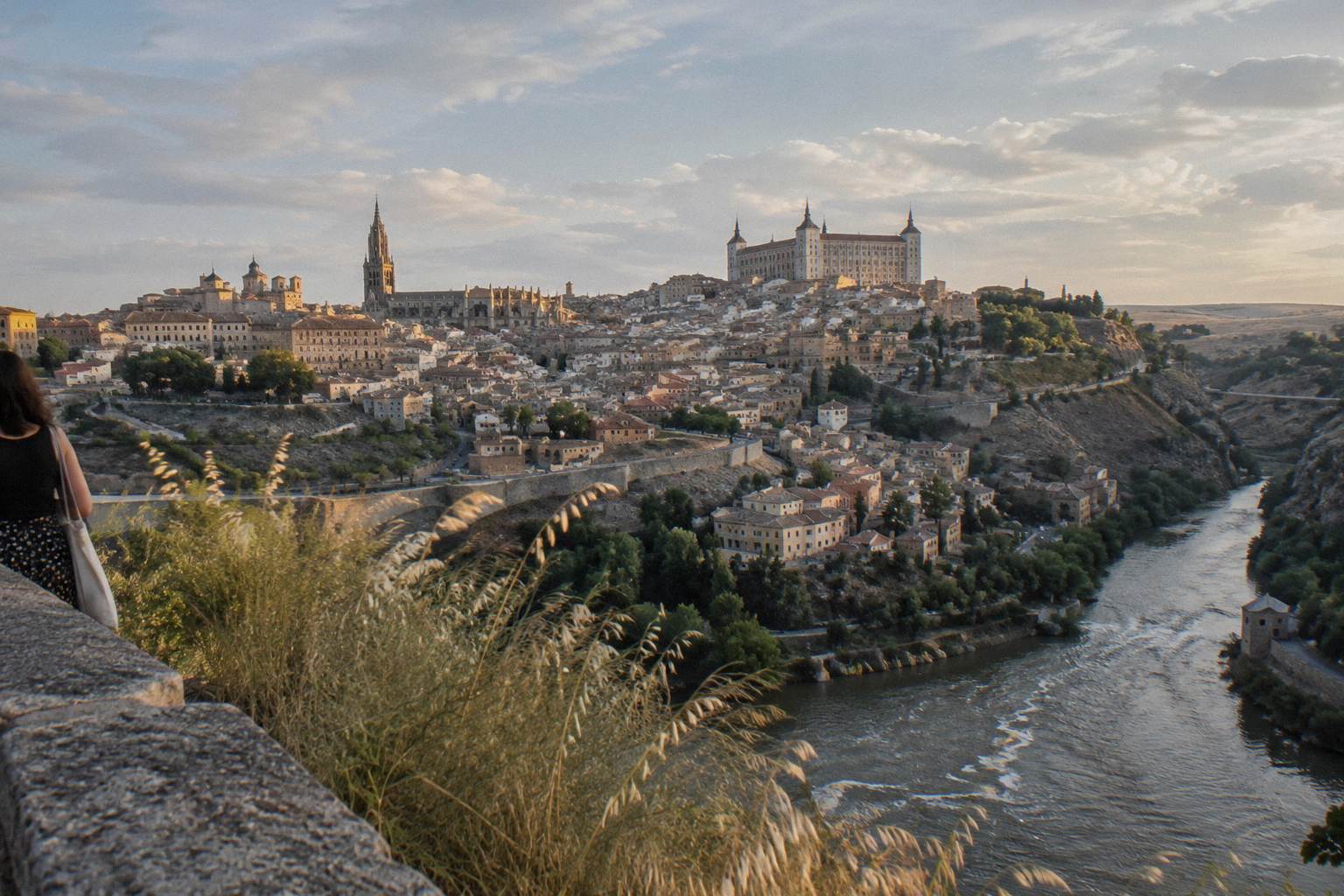
The bilingual best of Toledo in 90 minutes walk, run by FollowMe Toledo, meets at Calle de Armas 3, beside Plaza de Zocodover where the pink flag marks the spot, and runs 1 hour 30 minutes in English and Spanish, rated 4.55 out of 5 across 1,177 GuruWalk reviews. For a first visit compressed into a cold day, it is the efficient option: a compact loop's worth of orientation from the city's central square, finished in time to spend the afternoon on viewpoints or in a free museum.
| Walk | Guide | Meets at | Duration | Language | Rating on GuruWalk |
|---|---|---|---|---|---|
| English Three Cultures Walk | Toledo a pie | Plaza de Zocodover | 1 hour 45 minutes | English | 4.88 out of 5, 251 reviews |
| Mystery And Subterranean Spaces | Enjoytoledo | Plaza de Zocodover | 1 hour 30 minutes | English | 4.86 out of 5, 1,734 reviews |
| Bilingual 90-Minute Walk | FollowMe Toledo | Calle de Armas, beside Plaza de Zocodover | 1 hour 30 minutes | English and Spanish | 4.55 out of 5, 1,177 reviews |
Winter also argues for booking rather than turning up, and not for the reasons summer articles give. In the low season the free walks still need a reservation through each walk's own GuruWalk page, and reserving costs nothing upfront under the pay-what-you-want model. It also fixes your walking hour at the warmest part of the day if you choose it that way, which is the single best winter decision available: a midday walk, an afternoon viewpoint while the light lasts, and a free museum window to close the day. The city's official tourism portal, turismo.toledo.es, is the place to confirm anything about the wider winter calendar.
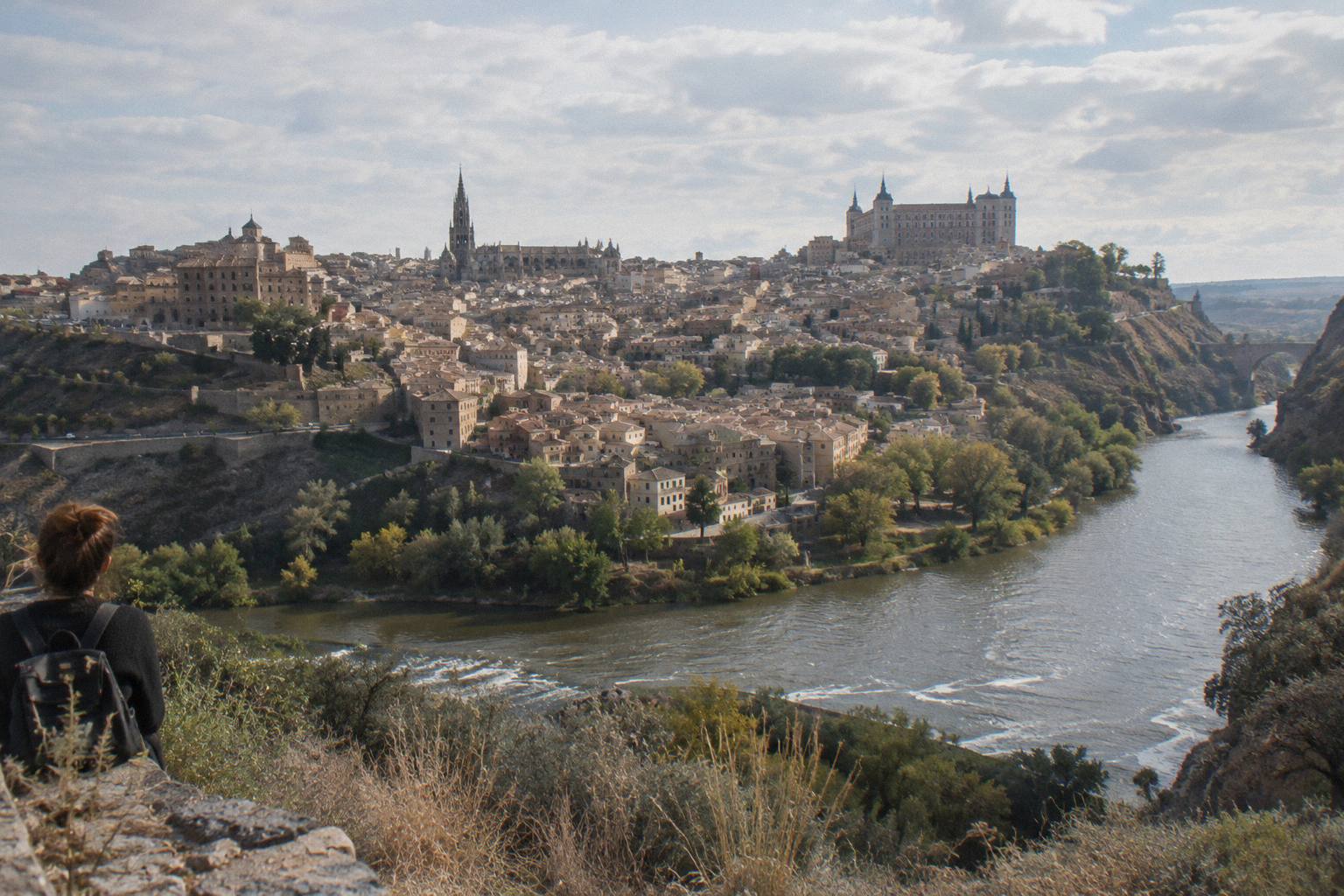
One more pairing is worth making on a short winter day. The three walks all start within a minute of Plaza de Zocodover, and the square itself, free and central, is where a frosty morning begins best: the light on the facades, the tourist office nearby on Plaza del Ayuntamiento for maps and warmth, and the whole old town rising behind it. Winter strips the square of summer clutter and gives it back to the buildings.
Mistakes That Trip People Up At A Winter Free Walk In Toledo
The mistakes are consistent: assuming the Cathedral is a free warm-up stop when its cultural visit costs 12 EUR, treating every museum's free day as the same day when three bodies run three rules, expecting the Tuesday-to-Saturday free archaeology sites to open on a Sunday, and betting the day on a dawn viewpoint when fog owns the valley until late morning. Each costs money, warmth or the day's best view.
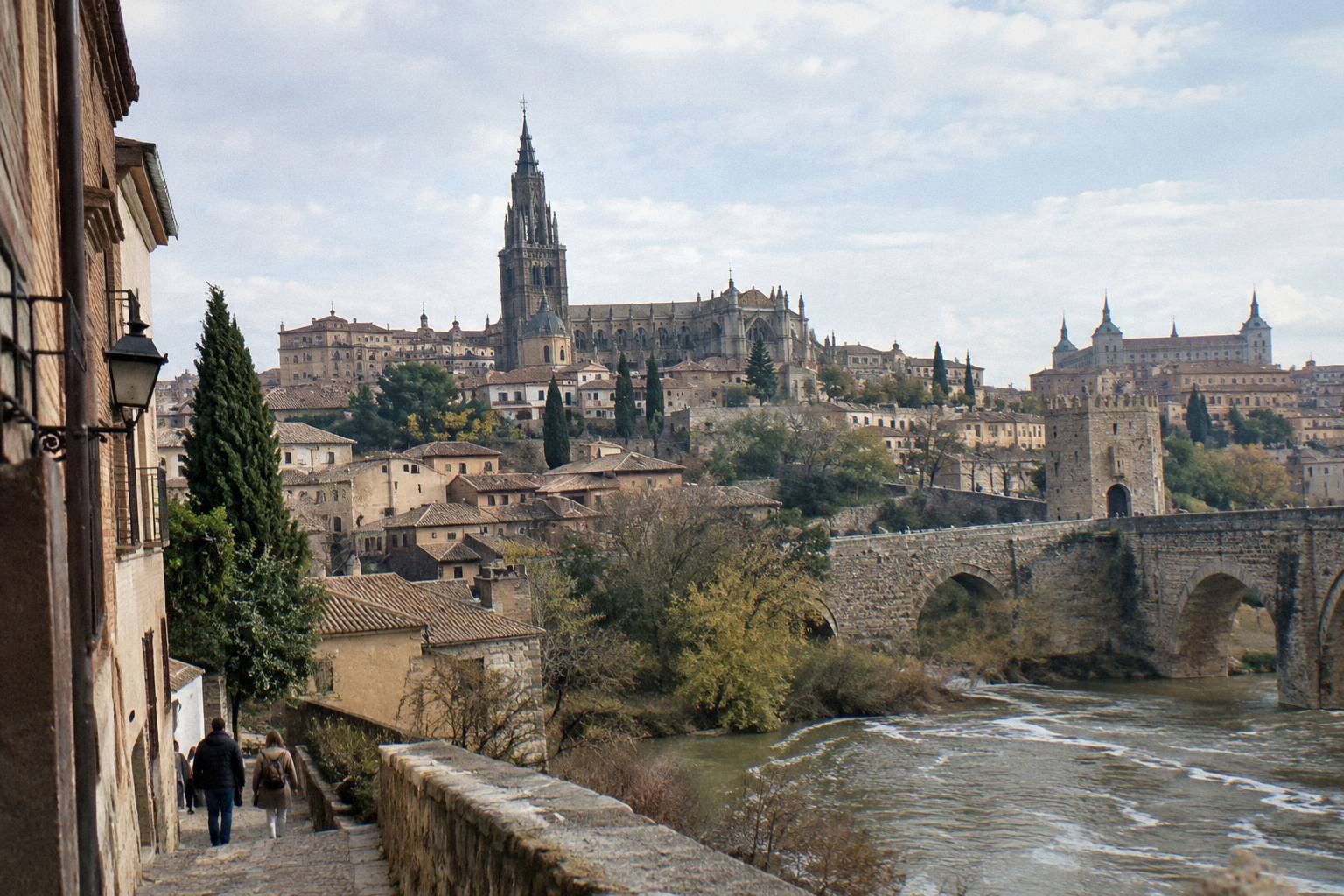
The first mistake is the free-versus-paid blur. The Cathedral exterior is free to admire, and the interior cultural visit is 12 EUR, Monday to Saturday 10:00-18:30 and Sunday 14:00-18:30, with free admission only for the categories listed earlier. The Alcázar exterior is free, and its interior is free to everyone every Wednesday. The Jesuitas tower is advertised on a 4 EUR ticket whose tower inclusion is unconfirmed, so never count that tower as part of any free plan. A viewpoint, gate or exterior never passes its free status to the interior or tower beside it; every pair is two facts, and mixing them is how winter budgets break.
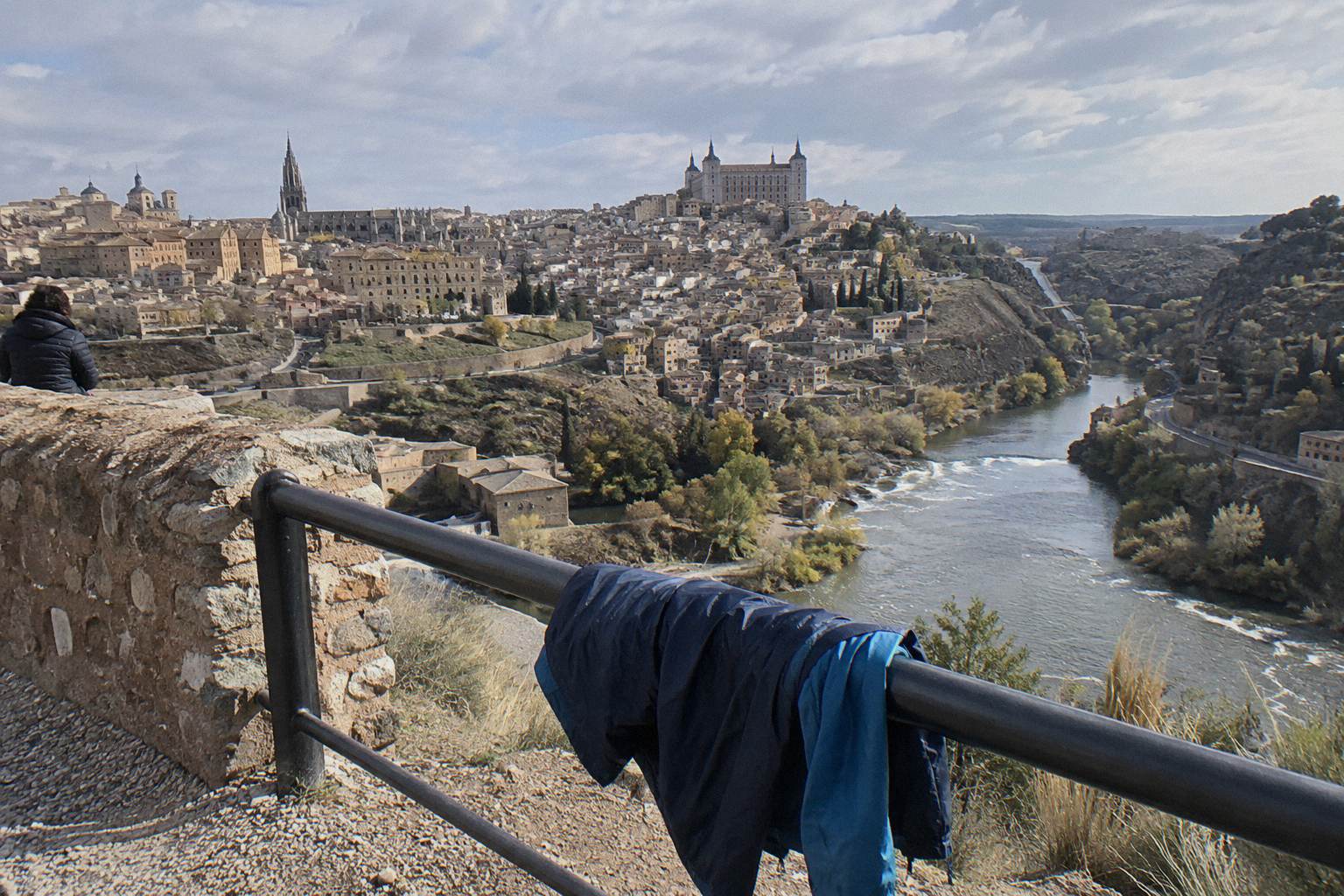
The second mistake is stacking free days. There is no city-wide free day. The Alcázar's free Wednesday is a Ministry of Defence rule; the Greco and Sefardi free windows from Saturday 14:00 and all Sunday are Ministry of Culture rules; Santa Cruz and Concilios are currently free under the regional government with no end date published. A Wednesday visit gets you the Alcázar free but not the Greco; a Sunday afternoon gets you the Greco and the Sefardi but not the Alcázar. Plan by attraction, body and day in the same breath, or the plan fails.
The third mistake is the Sunday-and-Monday trap at the free archaeology sites. The Cuevas de Hercules, open 12:00-14:00 and 16:00-18:00, and the Termas romanas are both free but both close on Sunday and Monday. Winter weekends are exactly when visitors reach for indoor free options, and those two days are exactly when these two are shut. The pulsera tourist bracelet deserves its own warning: it costs 14 EUR for seven named monuments over 7 days and does not include the Cathedral, the Alcázar, the Greco, the Sefardi Museum or Santa Cruz, so it is never a route to those interiors.
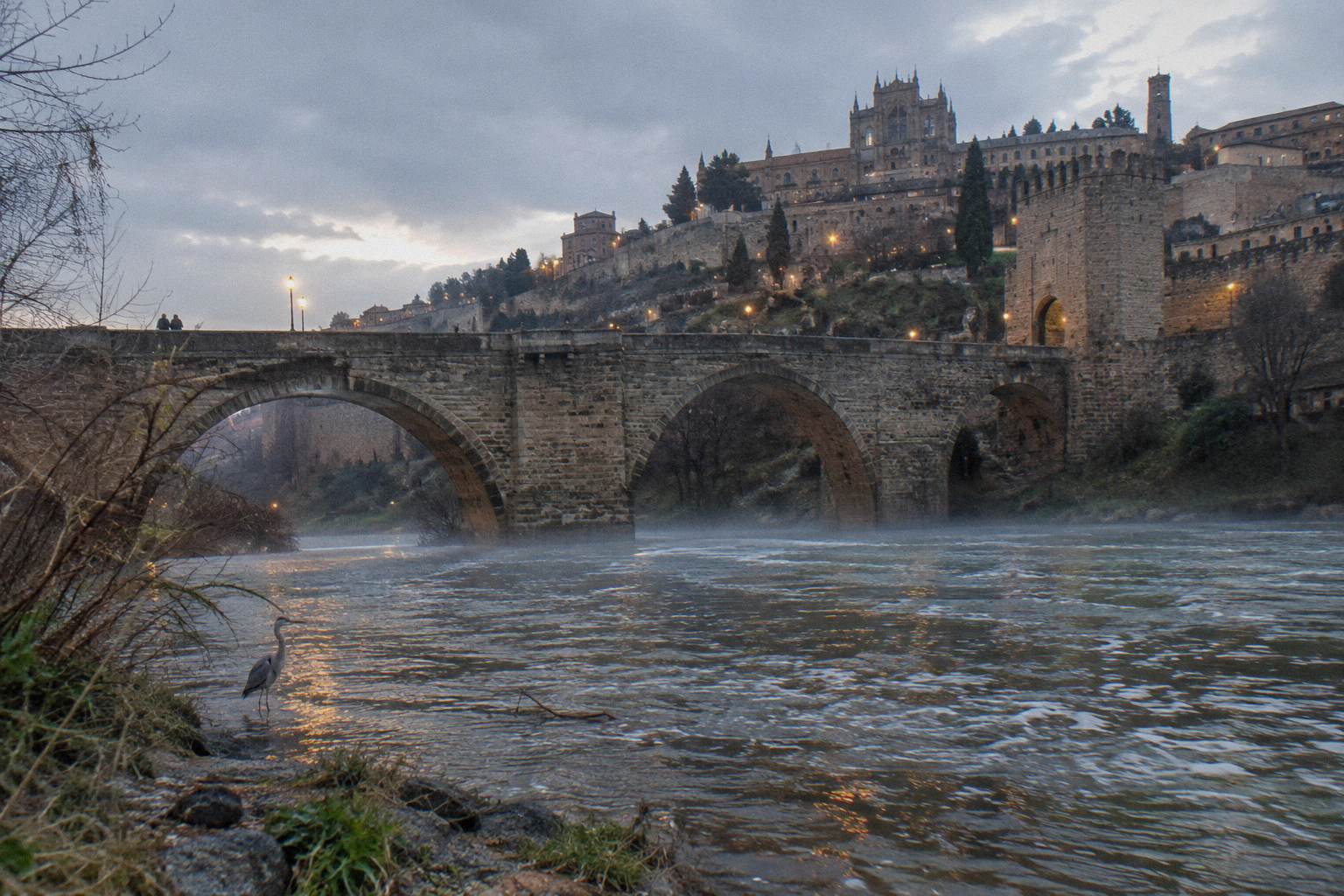
The fourth mistake is weather-shaped: gambling the day's photography on a dawn or dusk viewpoint. Valley fog owns the early hours and returns toward evening, so the Mirador del Valle pays best in the middle stretch of the day. Keep river-level walking, the bridges and the Senda ecológica del Tajo, for the clearest window, and treat frosty descents with respect. Winter in Toledo rewards the midday plan and quietly punishes the dawn one.
Common Questions About A Free Walking Tour In Toledo In Winter
Do The Free Walking Tours In Toledo Run In Winter?
Yes. The 3 free walking tours in English, all on GuruWalk, keep the same meeting points in winter: two at Plaza de Zocodover and one at Calle de Armas 3 beside it. Each walk is free to join, pay what you want, and reserved through its own GuruWalk page. Check that page for the times a walk runs on your dates.
How Cold Does A Toledo Winter Walk Feel?
Cold enough to plan for, not cold enough to cancel for. You are outdoors for up to 1 hour 45 minutes, and frost is a normal morning feature from November to February. Warm layers, gloves and gripped shoes are the practical kit, and booking the midday walking slot avoids the sharpest cold of the day.
Is Fog A Problem For The Viewpoints?
Sometimes. Fog pools in the Tagus valley below the hill and can hide the river, the bridges and the Mirador del Valle view entirely, while the old town above sits in clear air. It tends to thin in the middle of the day, which is why the midday and early-afternoon slots are the best time for the viewpoints in winter.
What If It Rains During The Walk?
The walks are outdoor free tours and run in rain, so bring a waterproof layer rather than an umbrella. Because every walk is pay what you want with nothing paid upfront, a wet hour costs you nothing but the hour. For heavier rain, the free museum windows are the indoor fallback.
Which Museums Are Free If The Weather Turns?
The Alcázar and Army Museum are free every Wednesday for everyone. The Museo del Greco and the Sefardi Museum are free from 14:00 on Saturdays and all Sunday. The Museo de Santa Cruz and the Museo de los Concilios are currently free, with no end date published. The Cuevas de Hercules and the Termas romanas are free but closed Sunday and Monday.
Does The Free Tour Go Inside The Cathedral Or The Alcázar?
No walk here includes entry to any paid interior. The Cathedral cultural visit costs 12 EUR, and the Alcázar interior is free to everyone every Wednesday. The walks are outdoor free tours through the streets, and any interior you want beyond that is booked separately at its own price.